Specialty coffee: what it is, how to choose it and how to brew it.
Brazil grows more coffee than any other country, and a small share of that harvest is specialty coffee. This guide explains what sets it apart and what to look for before you buy.
Specialty coffee is coffee that scores 80 points or more, on a 0 to 100 scale, in the Specialty Coffee Association (SCA) evaluation. To get there the green beans must be free of serious defects, and the cup has to be sweet, balanced and clean, tasting of where it was grown.
- Minimum score
- 80 SCA points
- Scale
- 0 to 100
- Primary defects
- None in 350 g of green coffee
- Evaluation
- Blind tasting (cupping)
What specialty coffee is
The yardstick is the Specialty Coffee Association's. First the green coffee is checked: a 350 g sample may hold no primary defects (black, sour or mouldy beans, stones) and almost no secondary ones. Then it is lightly roasted and tasted blind by trained cuppers, in a ritual called cupping.
The cuppers score fragrance, flavour, finish, acidity, body, sweetness, balance and how alike the cups are. The total runs from 0 to 100. From 80 points the coffee is specialty; from 85 up it is usually called excellent. In Brazil, the BSCA (Brazil Specialty Coffee Association) works with the same scale.
Specialty, premium and everyday coffee
Words like "premium", "gourmet" or "extra strong" on a supermarket pack are marketing or industry categories with their own rules. In Brazil, "tradicional", "superior" and "gourmet" come from the roasters' association quality programme (ABIC). None of them is the SCA score, and a "gourmet" coffee is not specialty coffee by definition.
In practice the difference shows in the cup. Everyday coffee often blends harvests and origins and gets a dark roast that makes everything bitter and alike. Specialty coffee comes from an identified lot and is roasted to show the flavour it already has: sweetness, fruit, chocolate, nuts.
How to read the bag
A specialty coffee tells you where it comes from. If the bag only says "specialty", with no origin or date, be wary. Look for:
- Origin: the region, sometimes the farm or the producer.
- Variety: Catuaí, Bourbon, Mundo Novo, Arara, Geisha…
- Process: natural, pulped natural, washed, fermented.
- Score: the lot's SCA score.
- Roast date: the day it was roasted, not just a best-before date.
- Tasting notes: what you should taste in the cup.
Processes: natural, pulped natural and washed
Processing is what happens between picking and the dry bean, and it changes the flavour a lot.
- Natural: the whole cherry dries with skin and pulp on. More body and sweetness, notes of caramel, chocolate and ripe fruit. It is the most common process in Brazil.
- Pulped natural: the skin comes off and the bean dries with some of its mucilage. It sits between natural and washed: sweet, clean, medium-bodied.
- Washed: the pulp is removed and the bean ferments and is washed before drying. More acidity and clarity, floral and citrus notes.
Specialty coffee regions in Brazil
Almost all Brazilian specialty coffee is arabica, from regions with altitude, clear seasons and careful harvesting.
- Cerrado Mineiro (MG): high plateaus with rainy summers and dry winters. It was Brazil's first coffee region with a Denomination of Origin.
- Sul de Minas (MG): the country's largest growing region, with mountains and family farms.
- Mogiana (SP and MG): one of Brazil's oldest coffee regions.
- Matas de Minas (MG): mountain terrain and smallholdings.
- Chapada Diamantina (BA): high ground in inland Bahia, with prize-winning coffees.
- Espírito Santo mountains (ES): mountain arabica in a state better known for conilon (robusta).
Whole bean or ground?
Whole bean, if you have a grinder. Coffee starts losing aroma soon after grinding, and whole beans protect the flavour for longer. Grind just before brewing, at the size your method needs.
Without a grinder, ground coffee works well too, as long as it is ground close to shipping and for the right method. For pour-over, moka pot and French press, a medium grind covers most recipes.
How to keep specialty coffee
In its own bag, tightly closed, away from light and heat. Not in the fridge: moisture and smells ruin coffee. Once opened, it is best within four weeks.
Very freshly roasted coffee is still releasing gas; two or three days after roasting it is already great for filter.
How to brew specialty coffee at home
Three things matter most: the ratio (about 1 g of coffee to 15–16 ml of water for filter), hot but not boiling water (90–96 °C) and the right grind for the method. Each guide below has the full recipe and a calculator.
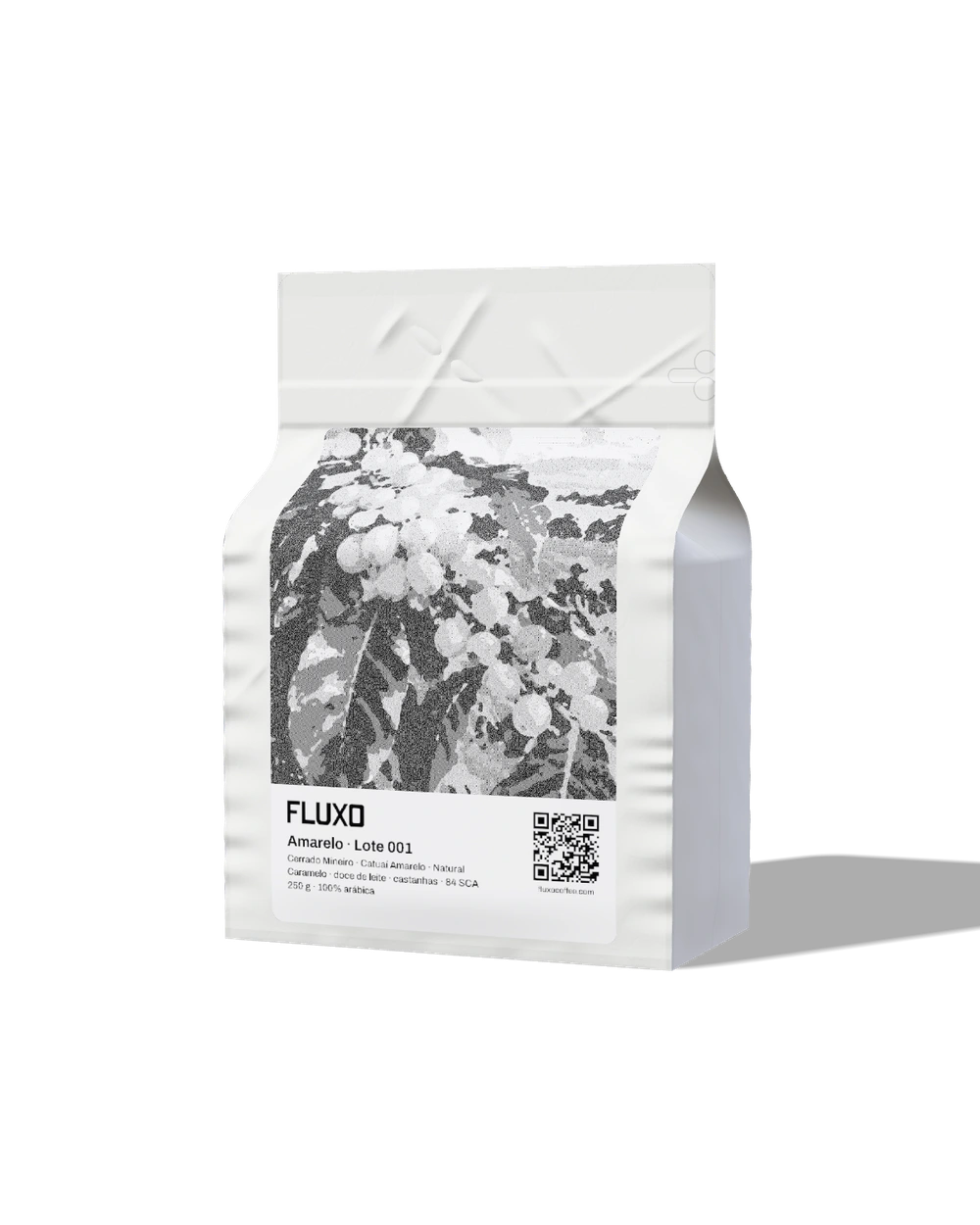
Amarelo · Lote 001, 84 SCA points.
A natural-process Catuaí Amarelo from the Cerrado Mineiro. In the cup: caramel, doce de leite and nuts, a full body and a long, sweet aftertaste. A Florianópolis micro-roastery roasts it every week in 10 kg batches. Whole bean or ground, 250 g bag, shipped anywhere in Brazil.
- Origin
- Cerrado Mineiro, MG · Brazil
- Variety
- Catuaí Amarelo
- Process
- Natural
- Score
- 84 SCA points
- Notes
- Caramel · doce de leite · nuts
- Grind
- Whole bean or ground
Specialty coffee questions
What is the minimum score for specialty coffee?
80 points on the Specialty Coffee Association's 0–100 scale, with green coffee free of primary defects.
Is "gourmet" coffee the same as specialty coffee?
No. "Gourmet" is a commercial category with its own rules. Specialty coffee is coffee that scores over 80 points in the SCA evaluation and comes from an identified lot.
Is specialty coffee stronger?
Not necessarily. What people call "strong" is often a dark roast and bitterness. Specialty coffee has more flavour and less bitterness; how intense the cup is depends on the ratio you use.
Does specialty coffee have more caffeine?
No. Almost all specialty coffee is arabica, which has less caffeine than robusta. The caffeine in your cup depends more on how much coffee you use.
How long does specialty coffee keep once opened?
Best within four weeks, with the bag tightly closed, away from light and heat and out of the fridge. Whole beans stay fresh longer than ground coffee.
Where can I buy specialty coffee online in Brazil?
From roasters and shops that state the origin, process, score and roast date. At FLUXO, Amarelo · Lote 001 (84 SCA points, Cerrado Mineiro) is roasted every week in Florianópolis and ships anywhere in Brazil, paid with Pix or card.